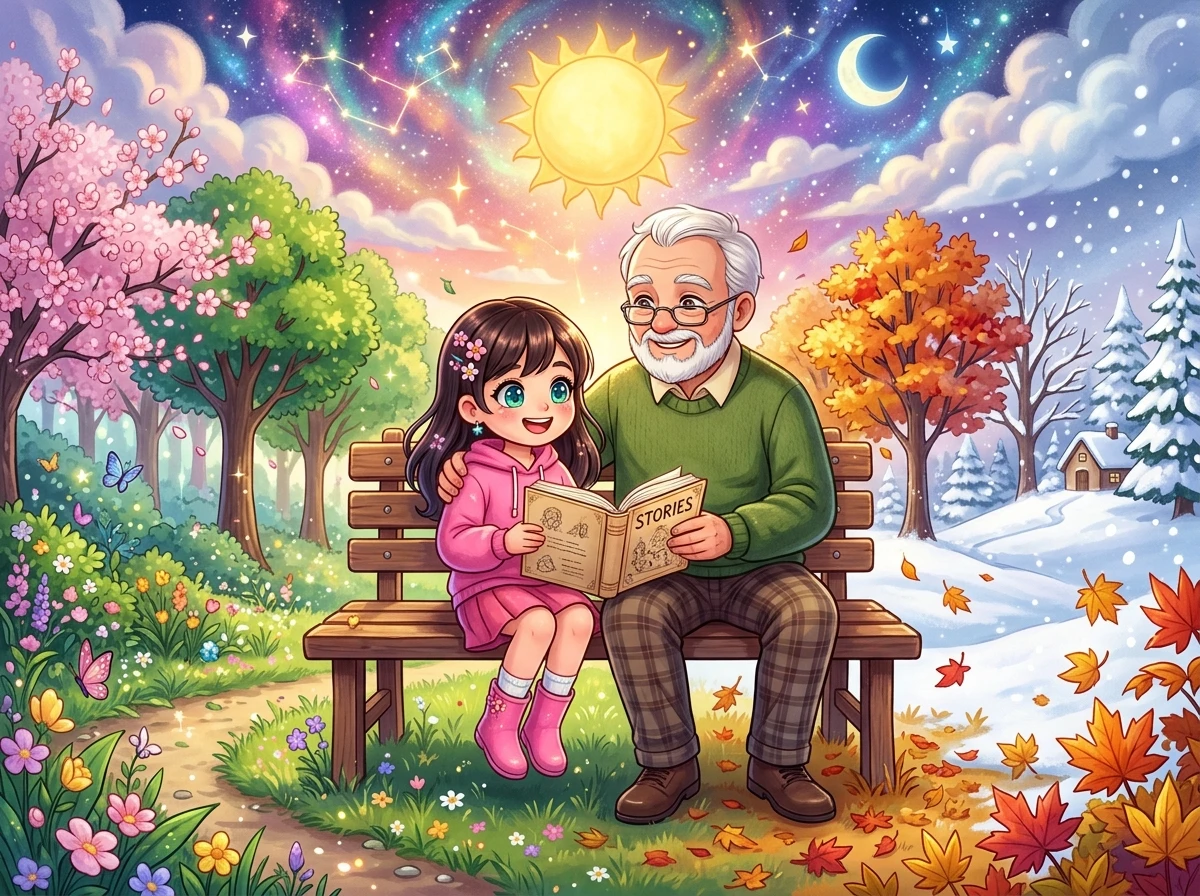
Once upon a time, there was a world billions of years old, filled with the magical dances of nature. The sun illuminated it every time it rose, and the stars adorned the sky at night. In this magical world, the seasons alternated like a curtain, dancing along with the heartbeat of nature.
In this world lived an interesting girl named Aylin. Aylin was a very curious child. Despite her young age, she was constantly looking for new questions to discover the world and understand the secrets of nature. One evening, while looking at the stars in the yard, she wondered how the seasons came to be. She fell into deep thought and finally decided to ask her grandfather. Aylin excitedly ran to her grandfather.
“Grandpa, where do the seasons come from? Why does each of them look so different?”
Grandpa smiled, delighted by his granddaughter's curiosity: “Aylin, the secret of the seasons is hidden in nature's magical cycle. Each season tells its own interesting story.”
Aylin's eyes widened, and she began to listen to her grandfather with great enthusiasm.
The Awakening of Spring
“The seasons are related to the Earth's movement around the Sun and the tilt of its axis. In winter, the Northern Hemisphere receives less heat because it is tilted away from the Sun. But as the Earth continues its movement, due to the tilt of the axis, the sun's rays do not fall equally on different regions.”
As Grandpa spoke, Aylin felt as if she was stepping into a magical world of knowledge and continued to listen carefully.
“When spring arrives, the sun's rays begin to fall more directly on the Northern Hemisphere. Days get longer, nights get shorter. The soil warms up from this heat, snow melts, and plants awaken from their slumber. Nature comes alive again, and many plants open their buds and bloom.”
The Bounty of Summer
“The summer season occurs when the Northern Hemisphere is tilted most towards the Sun. This causes the Northern Hemisphere to receive more sunlight and for days to be longer. The sun's rays fall at a steep angle and provide more intense heat.”
This intense heat warms the soil and water. The temperature of rivers and lakes increases, and water evaporates, rising into the air. This leads to the formation of clouds and sometimes brings rain.
In addition, during the summer season, plants and trees continue to grow and photosynthesize. Plants capture the energy of sunlight with their leaves and convert it into nutrients. At this time, oxygen is also released into the air. Therefore, summer is the most productive time for plants.
The summer months are an indicator of nature's abundance. During this period, field and garden crops ripen, fruit trees yield abundant harvests, and nature's generosity delights people.
As Aylin learned how spring came to be, she envisioned nature's awakening before her eyes. Now, thanks to her grandfather's words, she felt the bounty of summer and the joy of children running under the warm sun.
Autumn's Color Carnival
“When summer ends, the sun's rays no longer fall as directly, and days get shorter. This weakens photosynthesis in plants and causes a decrease in chlorophyll in the leaves. As chlorophyll decreases, other pigments like carotene and anthocyanin in the leaves become visible.”
This process causes the leaves to turn yellow, red, and orange. As the wind blows, colorful leaves fall from the trees, creating a vibrant carpet on the ground. The cool autumn air slows down plant growth and creates conditions for leaf fall.”
Aylin looked at her grandfather with curiosity and asked: “So, in autumn, the color of the leaves depends on carotene and anthocyanin?”
Grandpa answered, delighted by his granddaughter's question: “You got it right, Aylin! Carotene and anthocyanin are pigments found in leaves, meaning they are coloring substances. When autumn comes, chlorophyll decreases, and leaves lose their green color. But carotene and anthocyanin begin to appear more clearly. Yellow and orange colors come from carotene, while red and purple hues come from anthocyanin. Thanks to these pigments, autumn forests are painted in beautiful colors.”
As Aylin listened carefully to her grandfather's explanation, she tried to understand the science behind this complex process in nature. This answer further increased her curiosity and encouraged her to learn more about nature.
The Silence of Winter
“The winter season occurs when the Northern Hemisphere is furthest from the Sun. This causes a decrease in the light received by the Northern Hemisphere and shorter days.”
The sun's rays falling at a more oblique angle to the ground causes the air to cool.
This cooling leads to the condensation of water vapor and snowfall. Snow slowly covers the ground, and layers of ice form.
When winter comes, the growth of plants and trees weakens or stops. Some evergreen trees reduce photosynthesis to conserve energy. Nature quiets down — birds migrate, animals seek warm shelters.
The silence of winter is part of nature's internal cycle, a time for rest and renewal for many living things. Plants store energy reserves in their roots and protect their seeds. Some animals hibernate or lower their body temperature to conserve energy.”
Her grandfather's conversation opened a new window in Aylin's mind. Aylin was now ready to learn and discover the secrets of nature more deeply.